Oysters Are The Keystone Species of the Chesapeake Bay.
Take the Shoreline and Oyster Reef Survey
MISSION FOR OYSTER RESTORATION
It is the mission of the District to develop and coordinate a living shoreline protection program that supports landowners through technical and financial assistance, advancing the use of oyster reefs, vegetation, beaches, and dunes to protect and restore coastal resources both for current and future generations. While oysters may not solve every problem, they certainly play a critical role in restoring a healthy bay. It is our belief that oysters are literally foundational to the Chesapeake Bay; Physically, Chemically, and Biologically.
By today’s calculations, there exist less than 2% of the oyster population compared to the original survey conducted in 1893. Oysters were once so plentiful that oyster beds had to be carefully mapped out to prevent ships from running aground or being damaged. In the 19th century, the Chesapeake Bay could be filtered entirely in just 3 days due to the abundant population of oysters. Today, filtering the same volume of the bay, takes nearly one year.
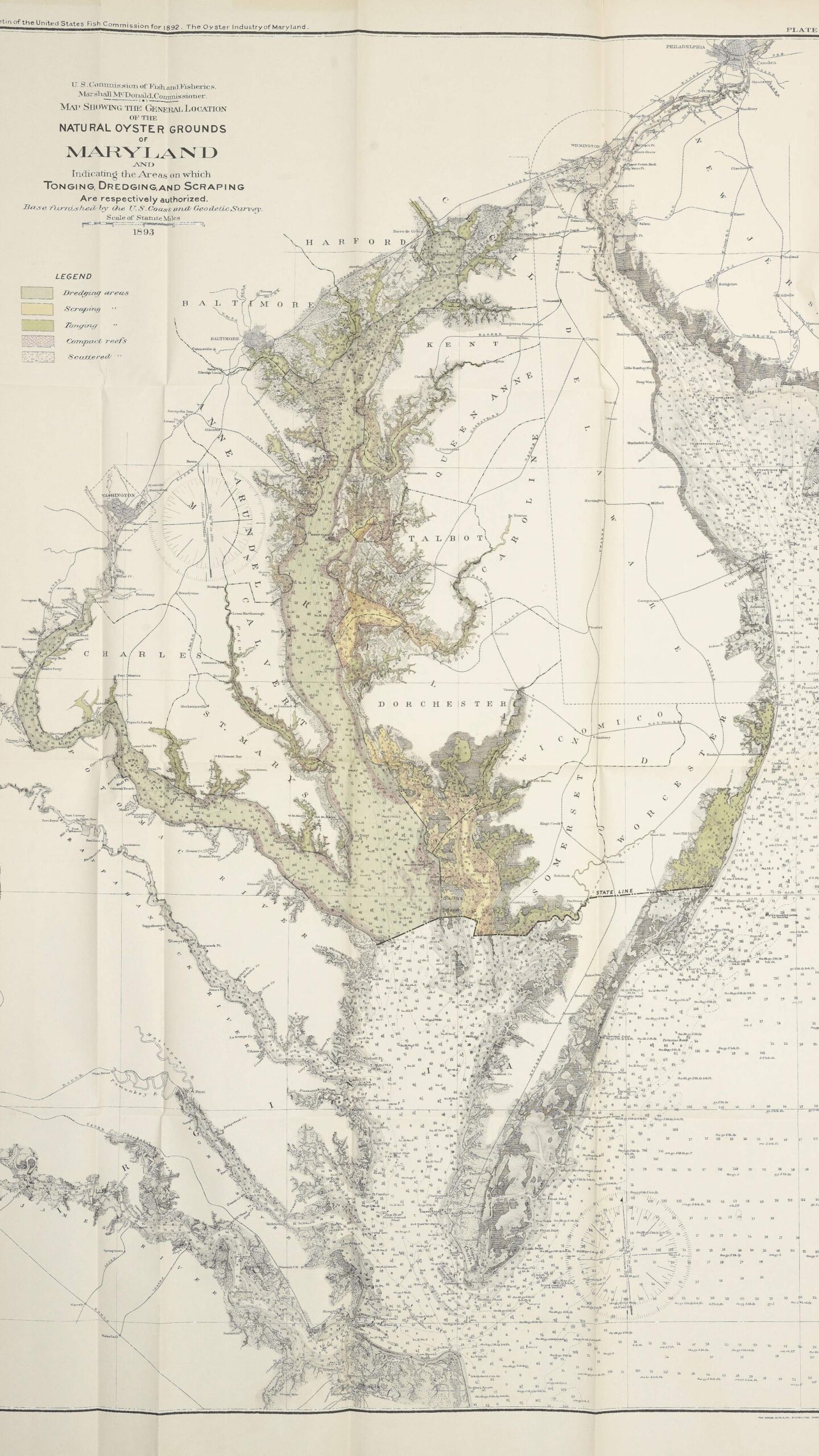
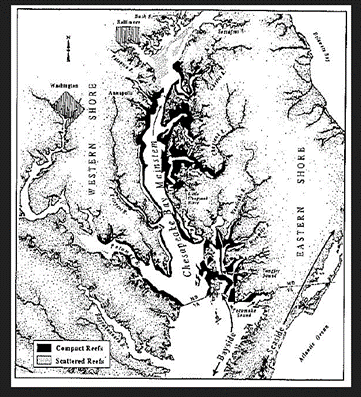
View current oysters population interactive map: AQUACULTURE CITING TOOL
WHY ARE OYSTERS ESSENTIAL?
1. They are Natural, Native Water Filters
Have you ever seen a pool without a filter? One adult oyster can filter up to 50 gallons of water per day. They remove algae, sediment (silt), and pollutants (like nitrogen and phosphorus) that make the water to look murky. These mighty filter feeders help underwater grasses (such as SAV, submerged aquatic vegetation) grow and thus support other marine life with habitat and shelter. Here is a 22-second timelapse video of oysters filtering a tank over 5 hours.
2. Habitat Creation
Oyster Reefs are cities under the water. A community of oysters is called a reef or bed. Oysters grow on each other, creating complex reef structures that provide shelter and spawning grounds for a wide variety of marine species, such as: crabs, fish, and shrimp. These environments support biodiversity and strengthen populations within the Chesapeake Bay.
3. Natural Shoreline Protection
Like the Great Barrier Reef in Australia, Belize Barrier Reef System in Belize, The Coral Triangle in Southeast Asia, or the reefs in North Carolina, reefs are our natural shoreline protection. Annually, Maryland loses approximately 600 acres of land due to erosion. It is the excessive waves that crash along the shore and cliffs that contribute to the land area diminishing. Oyster reefs act as a natural barrier in the water that slow down incoming wave energy and act as a retaining wall underwater, holding sediments near the shoreline. Healthy oyster reefs break or slow down this strong wave action and help hold beaches and marshes together, thus lessening erosion.
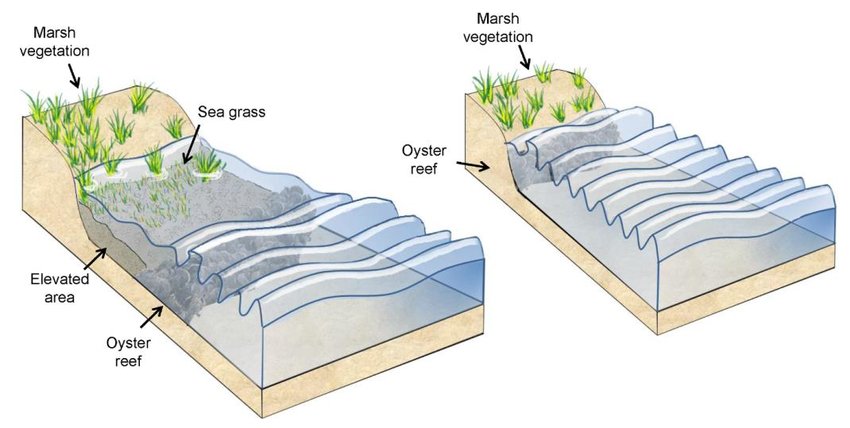
Right: Oysters at the shoreline demonstrating high wave energy.
4. Nutrient Cycling
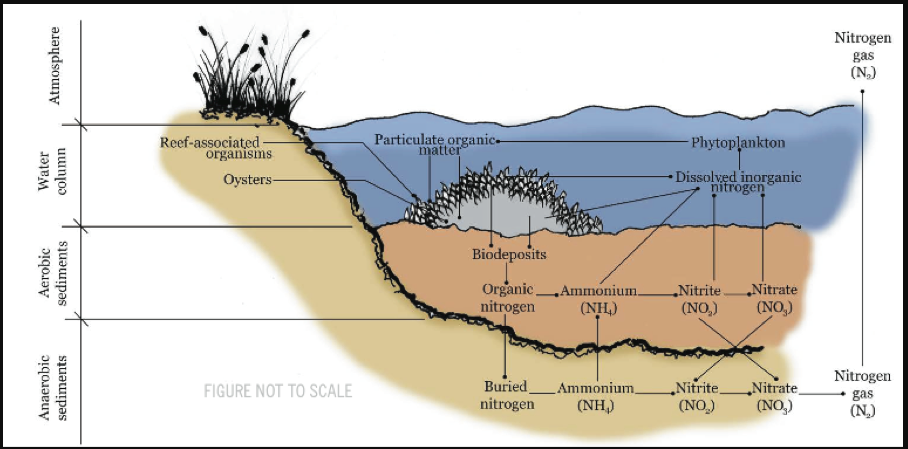
Oysters play a role in cycling and storing nutrients. The individual oyster absorbs nitrogen and phosphorus in the meat of their body and their reefs create an ecosystem of small organisms that further process the nutrients. When there are excess nutrients in the water, algae blooms grow rapidly. When the algae die, other microorganism and bacteria consume the decaying algae and consume mass amounts of oxygen, creating dead-zones. Oysters act as a filter for these pollutants.
5. Economic Importance
Without oysters, the Chesapeake Bay and its tributaries will experience poorer water quality, habitat loss for other species, and reduced ecological resilience. Restoration projects are critical, not just to revive the oyster population, but in restoring the health of the entire ecosystem. Reduced crab, oyster and fish populations result in a lesser amount of watermen occupations, and less seafood! Oysters are truly a keystone species supporting both the environment and the regional economy around the Chesapeake Bay.
HOW CAN I HELP?
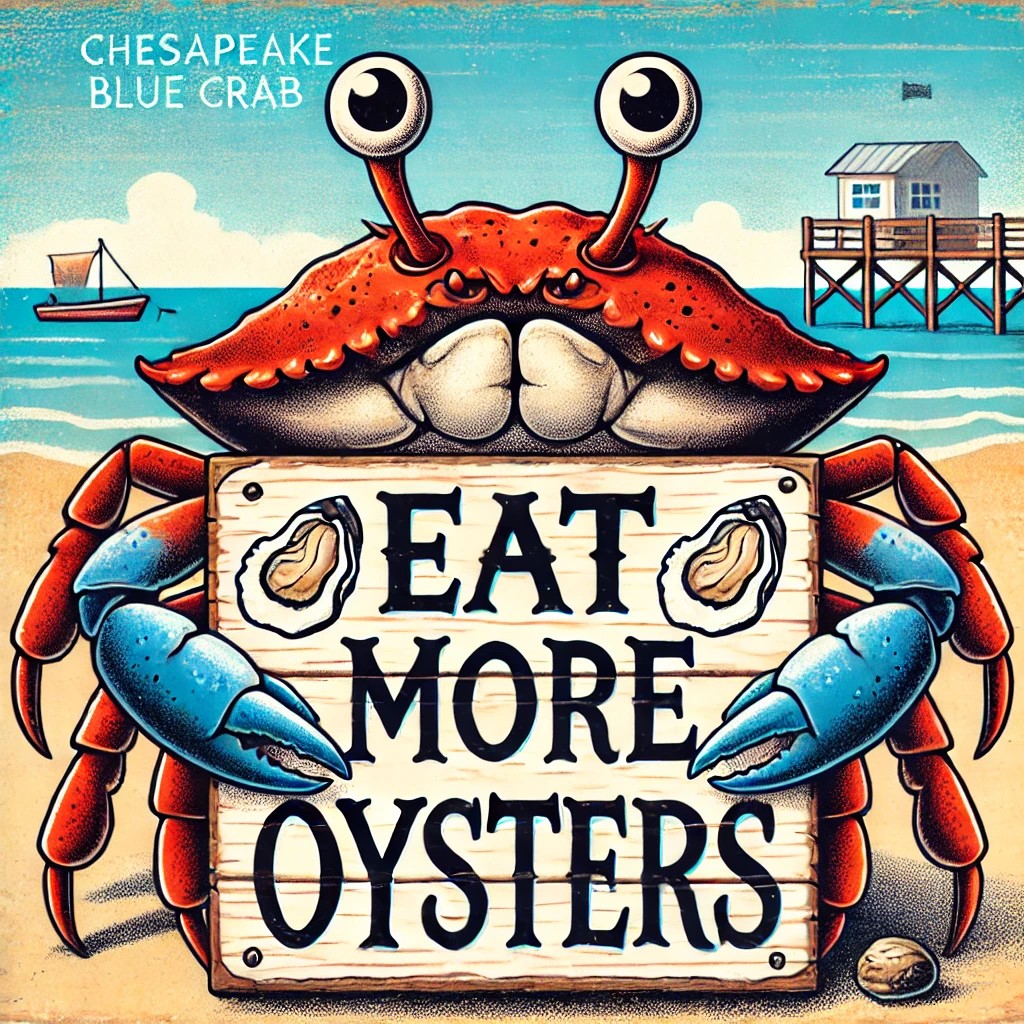
1. Eat More Oysters! (And recycle the shells).
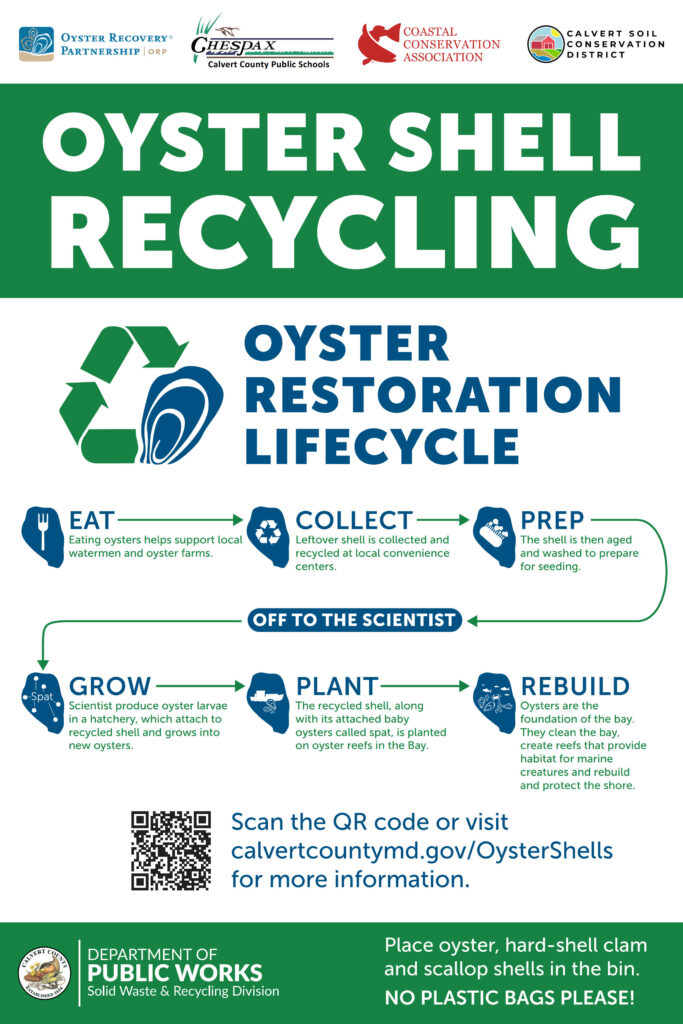
Although it might seem counterintuitive, eating oysters can actually help grow the oyster population. In fact, recycled oyster shells are a critical part of the oyster restoration process. Up to ten baby oysters, called spat, can latch and grow on a single recycled oyster shell. That means every oyster you eat can create habitat for 20 more oysters in the Bay. You can help grow more oysters in the bay by recycling your old oyster, hard-shell clam and scallop shells!
In support of our local watermen, we recommend purchasing locally harvested oysters, whether they are wild harvested or by aquaculture. Many watermen would be happy to receive recycled shells; get to know our local watermen and ask whom to return your shell to!
You can also recycle shells at any Calvert County convenience center. Look for this sign (below) and place only the shells in the bin – no pre-wash or rinse required. This program supports restoration of oysters in State designated sanctuaries.
2. Try Oyster Gardening.
The Chesapeake Bay Foundation’s (CBF) Oyster Gardening Program allows people the opportunity to help bring back this vital species by growing oysters alongside their docks. Oyster gardeners pick up their baby oysters (spat-on-shell) from CBF in the late summer/early fall. Once oysters have grown to 1-2”, they are returned to CBF in late spring/early summer for planting on sanctuary reefs. The Chesapeake Bay Foundation then transplants the oysters onto sanctuary (non-harvest) reefs in Maryland waters in the summer.
3. Build Oyster Reef Balls.
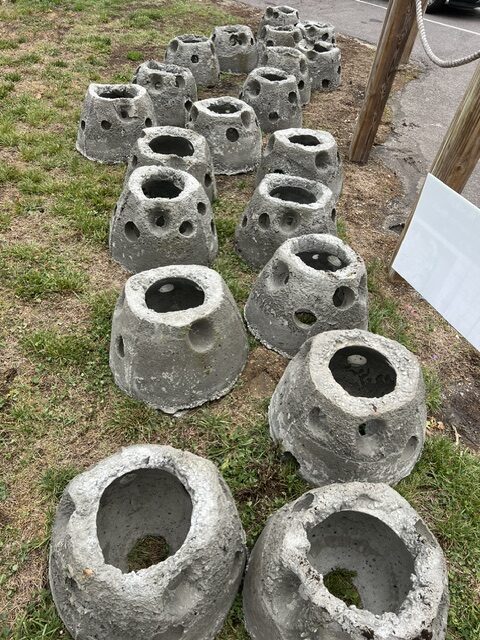
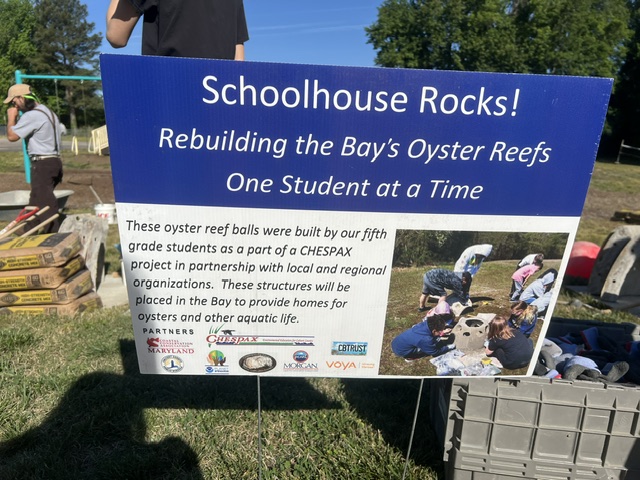
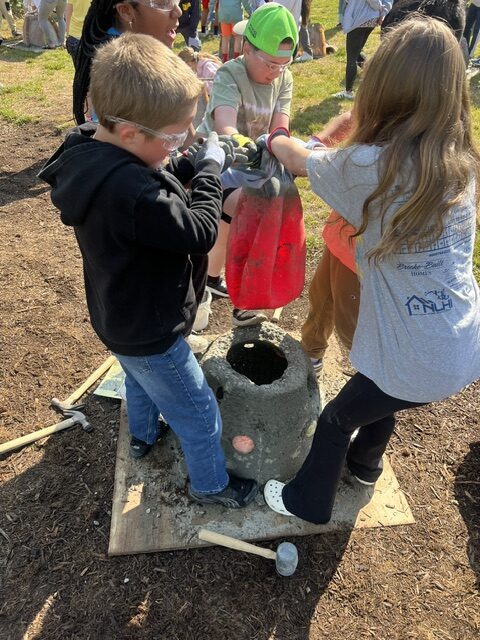
Concrete oyster reef balls are hollow, dome-shaped artificial reef structures made from marine-friendly concrete which are designed to restore habitats and protect shorelines from erosion. They feature rough surfaces, holes for water circulation, and internal voids that provide shelter and attachment points for oyster larvae and marine life. Organizations such as the Coastal Conservation Association of Maryland (CCA) often hosts free reef-building events. No experience required! Check out their calendar.